
JEE Main 2 April 2026 Shift 2: Chemistry Question 67
A molecule with following structure under mild acidic condition is hydrolysed to produce and . Identify the correct statements about and .
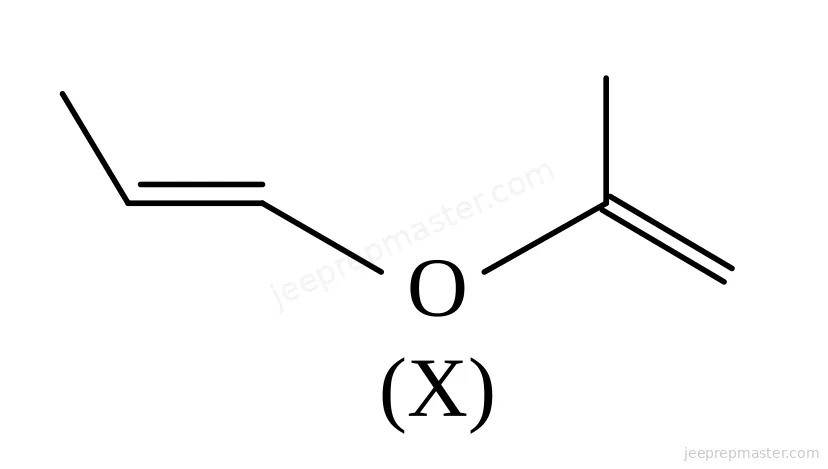
A. Both and have same molar mass.
. and can be distinguished from each other by .
. and react with with same rates.
. and undergo addition reaction with .
Choose the correct answer from the options given below:
Show answer and solution
Correct answer: Option 4
The structure is an ether of two enols, . Acidic hydrolysis followed by keto–enol tautomerization gives propanal, , and propanone, . Both have formula and molar mass , so A is true.
Neither product is a carboxylic acid, so neither liberates from ; this reagent does not distinguish them. is false. Propanal reacts faster than propanone with because its carbonyl carbon is less sterically hindered and less deactivated by electron-donating alkyl groups. is false.
Both carbonyl compounds undergo nucleophilic addition with dinitrophenylhydrazine, followed by elimination of water to form hydrazones. Thus is true, and A and only gives option .